

If your vision feels off—blurry on screens, dry by late afternoon, or less crisp at night—this eye test South Africa playbook gives you a clear path. You’ll know when to book, how to prepare, what to expect in the chair, and how to look past bargain headlines to protect long-term visual clarity.
Decide your outcome first: what this eye test must answer
Before comparing prices or time slots, be clear about the question you need answered. Your goal shapes which tests are run and how you brief the optometrist.
- Regain visual clarity for daily tasks (screen work, reading, night driving)
- Investigate a change (new blurry vision, headaches, dry eyes, double vision, halos)
- Routine health check (especially if you’re over 40, have diabetes or hypertension, or a family history of glaucoma)
- Update lenses or start with contacts
- Meet driving or occupational clearance requirements
Urgent red flags—book immediate care, not a routine slot:
- Sudden vision loss, a dark curtain, or flashes with many floaters
- Severe eye pain, marked redness, or light sensitivity
- One‑sided symptoms, new double vision, or a severe new headache
Set yourself up: the inputs, costs, and provider choice
Arrive with the right information so your optometrist can run the correct sequence and interpret results in context.
What to note (on paper or your phone):
- Symptoms and timing: when blur, eye strain, or headaches start; what eases them
- Screen and task load: hours at laptop/phone, reading distance, night driving frequency
- Old-school eye habits: breaks, eye relaxation, outdoor time, lighting, and posture
- Medical background: diabetes, hypertension, autoimmune disease; medications that dry eyes (allergy, acne, anxiety, ADHD, sleep)
- Family history: glaucoma, macular degeneration, retinal detachment, keratoconus
- Current eyewear: bring all glasses/contacts and any old prescriptions
- Lifestyle priorities: thin/light lenses, office/screen lenses, contact lens goals, protective eyewear for work/sport
- Budget and benefits: know your plan limits, co-pays, and what’s included vs extras
Typical costs in South Africa
- The average eye test in South Africa ranges between R200 and R450; comprehensive assessments that include retinal imaging or contact lens fitting often run R600–R800 (source: Optic Edge’s overview of local eye test pricing).
- R99 eye test promotions exist and can be useful for quick screening, but they may exclude imaging, contact lens assessment, or extended binocular vision checks. Confirm inclusions to avoid paying twice (example: nationwide R99 eye test deals).
- Medical aid: benefits vary widely—check whether the test and eyewear are covered and what counts as an add‑on.
Choosing the right professional
- Optometrist: primary eye care, refraction for glasses/contacts, and detection of eye disease with referral when needed.
- Ophthalmologist: medical/surgical eye specialist—usually by referral unless urgent.
- For a plain-language overview of roles and common conditions, see the SAOA patient and public page.
Follow the sequence: book, prepare, and navigate your exam
Use these steps to get a thorough assessment and a plan you can action the same day.
- Choose the right appointment type
- If you have new blurry vision, fluctuating focus, headaches, dry eyes, or you’re over 40, ask for a comprehensive assessment.
- Ask what’s included: eye pressure, slit‑lamp exam, binocular vision testing, and a retinal check (with photos or OCT as available). Confirm add‑on pricing.
- Ask the duration: a routine check may be 20–30 minutes; a comprehensive assessment typically needs more time.
- Prepare 24–48 hours before
- Reduce heavy screen marathons if you can; it limits temporary functional blur skewing your results.
- Prioritise sleep and hydration; avoid excessive alcohol the night before.
- Bring glasses, contacts, case/solution, previous scripts, and your prep notes.
- If you wear contacts, confirm whether to remove them ahead of time (often 2–24 hours, practice dependent).
- Brief your optometrist in one minute
- Share your top three problems, when they happen, and the tasks you must do well (spreadsheets at 60–70 cm, long reads, night driving). Mention any past red‑flag episodes.
- What typically happens in a South African eye test
- Case history: symptoms, medical background, medications, family/ocular history
- Visual acuity: how clearly you see with/without correction
- Refraction: precise lens power; drops may be used in selected cases
- Binocular vision and focus tests: how your eyes team, converge, and refocus (often central to digital eye strain)
- Eye pressure (tonometry) and front‑of‑eye exam (slit lamp): checks for glaucoma risk, dry eyes, and ocular surface issues
- Retinal assessment: ophthalmoscopy; some practices include or offer imaging (photos or OCT) as an add‑on
- Contact lens assessment (if relevant): tear quality, corneal shape, trial lenses, hygiene guidance
- Make sense of the results and agree the plan
- Lenses when needed: consider task‑specific options (office/screen lenses, single‑vision with correct working distance, anti‑reflective coatings). For heavy screen use, pair optical correction with work‑distance adjustments and eye relaxation habits to reduce digital eye strain.
- Dry eyes: your clarity may fluctuate until the tear film is supported; expect lubricants, blink training, and environment tweaks.
- Health findings: you may be booked for further tests or referred to an ophthalmologist when indicated.
If your main pattern is screen fatigue with functional blur after long laptop sessions, download the free clarity guide for simple habits that support natural eye comfort.
- Aftercare and follow‑up
- New lens adaptation: a short settling period is common; report persistent headaches, dizziness, or double vision.
- Dry‑eye routine: drops, timed breaks, room humidity, and screen‑distance checks; ask for a tailored schedule you can stick to.
- Review interval: usually 1–2 years if stable; sooner if symptoms persist, you’re over 40, have systemic risks, or wear contacts daily.
Helpful deep dives on BlurryVision.co.za
- Practical ways to reduce digital eye strain if screens are your main trigger.
- What’s normal after 40 versus warning signs when near vision blurs.
- Hidden causes of blurry vision that need urgent care.
The common failure points (and how to sidestep them)
- Chasing the lowest price: a R99 promo can be fine for a quick screen, but it may skip crucial checks. Confirm inclusions (eye pressure, binocular vision, retinal assessment) before you commit.
- Booking too short a slot: complex symptoms, first‑time corrections, or contacts deserve a comprehensive appointment.
- Vague symptom notes: “tired eyes” is not enough. Specify tasks, timing, and what eases or worsens strain.
- Ignoring dry eyes: an unstable tear film blurs vision; treating dryness often stabilises clarity.
- Skipping binocular vision tests: teaming and focus issues drive screen fatigue; make sure these are assessed.
- Waiting on red flags: sudden, painful, one‑sided, or rapidly worsening vision needs urgent assessment.
- Believing coatings fix posture: anti‑reflective coatings reduce glare, but distance, lighting, and breaks do the heavy lifting for comfort.
Quick red‑flag refresher
- Sudden vision loss or a dark curtain
- Flashes with a sudden shower of floaters
- Severe eye pain, redness, or light sensitivity
- One‑sided symptoms, new double vision, or a severe new headache
Bottom line: be clear on your goal, bring the right inputs, confirm what’s included, and use the results to tune both lenses and habits.
Next step: If your symptoms are persistent, sudden, painful, or one‑sided, book an eye test with a qualified optometrist today.
BlurryVision.co.za is a South African eye-health education site helping readers understand blurry vision, reduce preventable eye strain, and know when to seek proper optometry care.
Read next
Related posts
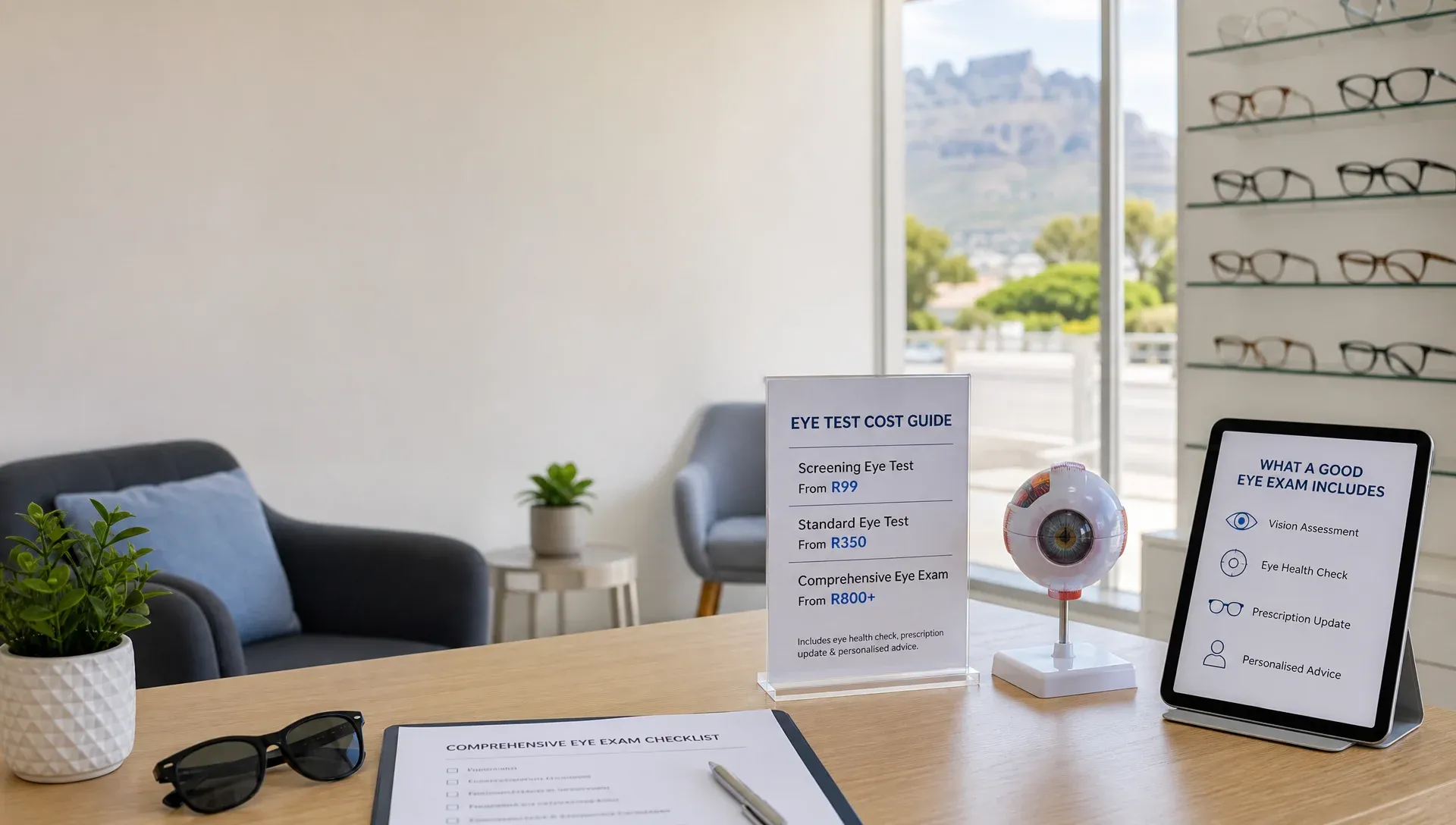
Eye Test Cost South Africa: R99 vs R800 - Which Exam Actually Protects Your Vision?
Eye test cost South Africa ranges from R99 screenings to R800+ comprehensive exams. Compare what each includes, when cheap tests backfire, and how to choose the right depth for your vision needs.

Digital Eye Strain Events in South Africa 2026: From Nairobi's IAPB Conference to Local Wellness Days
Find digital eye strain South Africa events worth following—from IAPB’s 2030 IN SIGHT LIVE in Nairobi to local wellness days—plus practical tips to cut screen fatigue.

Screen Time Causing Blurry Vision? Fix Digital Eye Strain Before It Worsens
Blurry vision after screens? Learn how to diagnose and fix digital eye strain with targeted habit changes, workspace tweaks, and know when to book an eye test in South Africa.